

Interestingly, coinciding with the album’s release, Ethio-jazz godfather Mulatu Astatke and band are at the end of a final global tour. Further, Strut announced that Mulatu Plays Mulatu will be his final album. Active since the early 1970s, the 81-year-old bandleader, composer, vibraphonist, and percussionist — who also plays keyboards very well — is ending his career at a peak. It was recorded between London and Addis Ababa using his long-standing U.K. band and musicians from the Jazz Village club in Addis. It was produced by Dexter Story, a longtime student of Astatke’s music. He engineered the African sessions, while Isabel Gracefield handled mixing in London. The 11-track set offers dazzling — sometimes radical — reinterpretations of his catalog compositions, expanding them harmonically, texturally, and dynamically with arrangements, extended improvisations, and intricate rhythmic complexity. Opener “Ze¿le¿se¿nga De¿we¿l” is the longest cut. It opens with a vanguard swirl of trumpet and saxophone before double bass rumbles underneath as Astatke’s vibes introduce the theme. He’s joined by piano, percussion, krar, and the double bass, creating the illusion of a small big band. The horns dovetail in unison on a snaky vamp before vibes, bass, and saxophone alternate solos. The brief “Kulun” offers an Ethiopian Anchi Hoye scale from the frontline instruments playing a percussion-heavy wedding song. The flute solo, atop strummed bass and layered hand drums, adds mystery and joy. There are three tracks originally included on the globally popular Ethiopiques 4 that was devoted to his music. These versions are longer, more intricately textured, and rich in harmonic variation and rhythmic invention. “Ne¿tsane¿t” fills its first minute with a tender, spacey dialog between vibes, bowed masenqo, and strummed bass. When the drums kick in, it becomes funky in an otherworldly sense before the horns bump in the theme. “Ye¿ke¿rmo Se¿w” uses a Latin rhythmic palette under an opening conversation between piano, bass, and vibes. The harmony shifts to merge Eastern modes with stylish, laid-back Western post-bop jazz. “Azmari” is introduced by a knotty trumpet and drums theme, before Astatke asserts the melody, allowing his musicians room to improvise. “The Way to Nice” is a bumping groover led by hand percussion, muted trumpet, and a pulsing bassline, with winding flute and Afro-Cuban piano; it makes full use of the “James Bond Theme” in its chorus. New Orleans-style blues is woven into “Motherland,” where piano, Afro-Latin rhythms, harp, and bass meet under the masenqo and trumpet in a gorgeous fusion of post-bop, Afro-Cuban, and Ethiopian swing. Closer “Ye¿katit” (originally from Ethiopiques 4) ripples with funk via a wah-wah-driven clavinet, roiling bassline, conga, kebero, and trap kit. Horns articulate the melody as the rhythm section lopes around a punchy double bass solo; everyone comes back together, Oliver Nelson-style, to send it off with hard-grooving intensity. For over 50 years, Mulatu Astatke has provided the world with a gateway into the magical world of Ethiopian jazz. As a final album, Mulatu Plays Mulatu stands with his very best work and is a bittersweet joy to celebrate. ~ Thom Jurek

Astatke, Mulatu – Mulatu Plays Mulatu
$45.90
Interestingly, coinciding with the album’s release, Ethio-jazz godfather Mulatu Astatke and band are at the end of a final global tour. Further, Strut announced that Mulatu Plays Mulatu will be his final album. Active since the early 1970s, the 81-year-old…
In stock
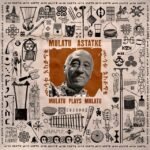
Astatke, Mulatu – Mulatu Plays Mulatu
$45.90

Reviews
There are no reviews yet.