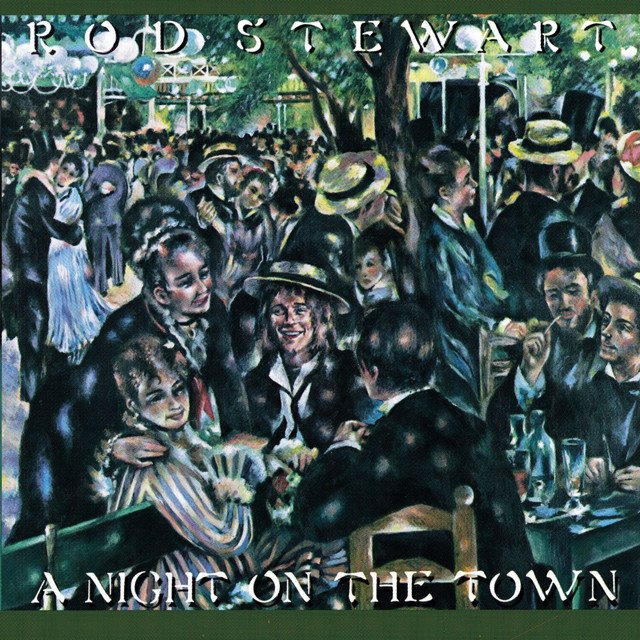


Rod Stewart – A Night On The Town arrives here on Rhino as a 50th anniversary pressing that does genuine justice to one of the more interesting records in Stewart’s catalog, cut from the original analog master by Matthew Lutthans at The Mastering Lab.
About the Album: Rod Stewart – A Night On The Town
By 1976, Stewart was operating at a commercial peak, and this album captured that moment with a confident, uneven charm that makes it worth revisiting. The record produced “Tonight’s the Night (Gonna Be Alright)”, a track that hit number one on the Billboard Hot 100 and spent eight weeks there, making it one of the longest-running chart-toppers of that year. That success came with friction: the song was banned by a number of radio stations for its suggestive content, which only sharpened its cultural edge. Alongside it sits his reading of Cat Stevens’ “The First Cut Is the Deepest”, a performance that introduced the song to a far wider audience and remains the version most people carry in their heads. These two tracks alone tell you a lot about what Stewart was doing here, balancing commercial instinct with a genuine feel for interpreting other writers’ material.
The Pressing and Why It Matters
Rhino’s 50th anniversary LP was cut by Matthew Lutthans at The Mastering Lab directly from the original analog master tape. That matters in practical terms. Lacquer cuts from original analog sources preserve dynamics and warmth that digital transfers routinely flatten, and Lutthans is a cutter with a strong reputation for handling vintage material carefully. This is not a remaster in the casual marketing sense. It is a considered, source-faithful cut made to commemorate fifty years of the album’s existence, and that specificity of process is exactly what separates a pressing worth buying from one that simply fills a shelf.
Who Should Want This Copy
Stewart collectors who have been working with older pressings of this album will notice the difference a proper analog cut makes, particularly in the mid-range warmth of the vocal performances, which is where Stewart’s voice lives and where cheap transfers tend to lose detail. If you came to this record through either of its two signature tracks and never owned a physical copy, this anniversary pressing is a reasonable place to start. And if you care about the lineage of 1970s British rock as it crossed into mainstream American pop culture, this album documents a specific moment in that story with enough texture to reward repeated listening.