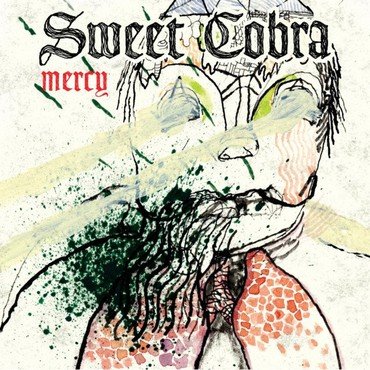


The Sweet Cobra/Get Rad Split (Color) vinyl is a 7-inch split release on Lifeline Records (catalog LLR 23) that brings together two sharp underground acts from the American Midwest, each contributing new material recorded in notably serious circumstances. This is a joint label release between Hawthorne Street Records, Lifeline Records, and Underground Communique, and the production credentials alone make it worth a close look.
Two Bands, Two Cities, One Record
Chicago’s Sweet Cobra recorded their side with Allen Epley and Eric Abert of Life and Times, tracking at Electronical before sending the material to Kurt Ballou at God City Studio for mixing. If you know Ballou’s work with Converge and the broader catalog he has shaped at God City, you know what that means for the weight and clarity of the final sound. Milwaukee’s Get Rad handled their two new tracks at Howl Street, recorded by Shane Hochstetler. Both sides arrive as genuinely new material, not reissues or alternates, which makes this split a document of where each band was at the time rather than a retrospective exercise.
Why the Sweet Cobra/Get Rad Split (Color) Vinyl Belongs in Your Collection
Beyond the recorded performances, this release was assembled with real care at every level. The artwork comes from PUTRID, a name well known in underground and extreme art circles, and the layout was handled by Ryan Patterson of Coliseum and Auxiliary Design. That combination of visual attention and audio craftsmanship is not standard for a 7-inch split. Color vinyl pressings of releases like this tend to move through the collector community quickly, especially when the production lineage is this distinct. A Ballou mix alone is enough to draw attention from people who follow that corner of heavy American rock closely.
Format and Label Details
This is a 7-inch single pressed on color vinyl, released under catalog number LLR 23. The Lifeline Records side of the release connects it to a label with a focused roster and a track record of physical releases that hold up over time. As a three-label co-release between Hawthorne Street, Lifeline, and Underground Communique, distribution was relatively limited by design, spread across communities rather than pushed through wide commercial channels. Copies surface occasionally but do not stay available long. If you follow either band, or if you collect material from the God City production world or from the Coliseum-adjacent design and music community, this one fills a specific and real gap in a collection.